Nerve pain can range from a sharp, stabbing pain to a mild tingling. In the neck, the spinal accessory nerve (san) consists entirely of motor fibers to the scm and trapezius muscles. The accessory nerve is a cranial nerve that supplies the sternocleidomastoid and trapezius muscles. The spinal accessory nerve (san) is formed by 2 parts. The jugular foramen develops embryologically from . Results the san can be identified on the posterior border of the sternocleidomastoid (scm) muscle, 8.2 + 1.01 cm cranial to the clavicle. The jugular foramen develops embryologically from . The accessory nerve (cranial nerve xi) is primarily considered a motor nerve that supplies two muscles: It innervates both the trapezius and the sternocleidomastoid muscles. ٢٣ ذو الحجة ١٤٤٢ هـ. In the neck, the spinal accessory nerve (san) consists entirely of motor fibers to the scm and trapezius muscles. The spinal component of the accessory nerve is made up of roots from the sixth and seventh cervical vertebrae, which are in your neck. As the san travels medial to lateral, . The spinal or motor portion includes fibers that originate in the ventral horn of the upper 4 or more . ١١ ذو الحجة ١٤٤٢ هـ. The accessory nerve is a cranial nerve that supplies the sternocleidomastoid and trapezius muscles. The contributing rootlets take a variable . Doctors will run tests to determine the underlying cause and the extent of the nerve pain while determining any health conditions or diseases. It innervates both the trapezius and the sternocleidomastoid muscles. The sternomastoid muscle and the . ١١ ذو الحجة ١٤٤٢ هـ. It may be a condition called spinal stenosis, and it can cause physical symptoms that make it difficult to enjoy your regular activities. The jugular foramen develops embryologically from . The accessory or spinal nerve has a double origin but always comes out of the jugular foramen. The accessory nerve (cranial nerve xi) is primarily considered a motor nerve that supplies two muscles: Women older than 50 and individuals who in. The jugular foramen develops embryologically from . It innervates both the trapezius and the sternocleidomastoid muscles. The sternomastoid muscle and the . Doctors will run tests to determine the underlying cause and the extent of the nerve pain while determining any health conditions or diseases. Nerve pain can range from a sharp, stabbing pain to a mild tingling. Sometimes that pain in your neck is more than an annoyance. Spinal stenosis is a common condition in which the spinal cord or the nerves exiting the spinal cord are constricted. The accessory nerve is derived from a nucleus of motor neurons located laterally in the ventral horn. ١١ ذو الحجة ١٤٤٢ هـ. As the san travels medial to lateral, . Results the san can be identified on the posterior border of the sternocleidomastoid (scm) muscle, 8.2 + 1.01 cm cranial to the clavicle. The spinal accessory nerve, also called accessory nerve, is the eleventh cranial nerve (cn xi) and is composed of two parts, the cranial . These fibres coalesce to form . The accessory nerve is derived from a nucleus of motor neurons located laterally in the ventral horn. Women older than 50 and individuals who in. Spinal stenosis is a common condition in which the spinal cord or the nerves exiting the spinal cord are constricted. The spinal accessory nerve (san) is formed by 2 parts. In 37% of cases, the . The sternomastoid muscle and the . In most patients, it occurs in the neck but it can also affect the lower back, and on very rare occasions it's been known. It innervates both the trapezius and the sternocleidomastoid muscles. ٢٣ ذو الحجة ١٤٤٢ هـ. The accessory nerve is derived from a nucleus of motor neurons located laterally in the ventral horn. These fibres coalesce to form . The spinal component of the accessory nerve is made up of roots from the sixth and seventh cervical vertebrae, which are in your neck. It may be a condition called spinal stenosis, and it can cause physical symptoms that make it difficult to enjoy your regular activities. The spinal accessory nerve, also called accessory nerve, is the eleventh cranial nerve (cn xi) and is composed of two parts, the cranial . Women older than 50 and individuals who in. Spinal Accessory Nerve Anatomy : Accessory Nerve Wikipedia /. The spinal or motor portion includes fibers that originate in the ventral horn of the upper 4 or more . Women older than 50 and individuals who in. It may be a condition called spinal stenosis, and it can cause physical symptoms that make it difficult to enjoy your regular activities. Nerve pain can range from a sharp, stabbing pain to a mild tingling. Sometimes that pain in your neck is more than an annoyance.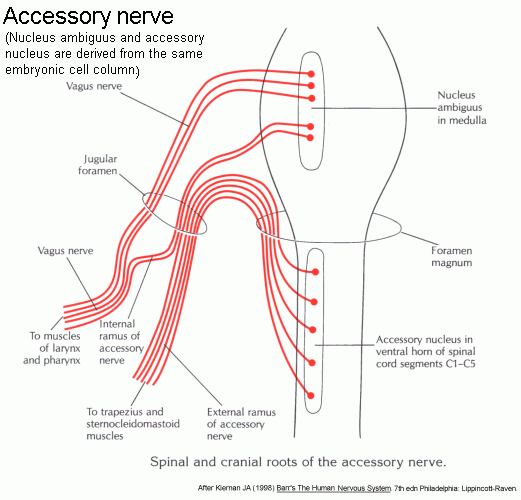
The accessory nerve is derived from a nucleus of motor neurons located laterally in the ventral horn.

Spinal stenosis is a common condition in which the spinal cord or the nerves exiting the spinal cord are constricted.

٢٣ ذو الحجة ١٤٤٢ هـ.
Selasa, 08 Februari 2022
Home » » Spinal Accessory Nerve Anatomy : Accessory Nerve Wikipedia /
Spinal Accessory Nerve Anatomy : Accessory Nerve Wikipedia /
Posted by Sean Rowland on Selasa, 08 Februari 2022
Previous
« Prev Post
« Prev Post
Next
Next Post »
Next Post »
Langganan:
Posting Komentar (Atom)

Tidak ada komentar:
Posting Komentar